It’s astonishing how many items we now associate with comfort and convenience at home actually began as solutions for the business world. Driven by necessity, inventors have often crafted ingenious tools for the workplace, only to see them become household staples over time. From coffee filters to sticky notes, these inventions transformed daily living. Discover the remarkable business roots of 15 familiar objects in the sections below.

Julie Ann
· 6 min read
1. Post-it Notes

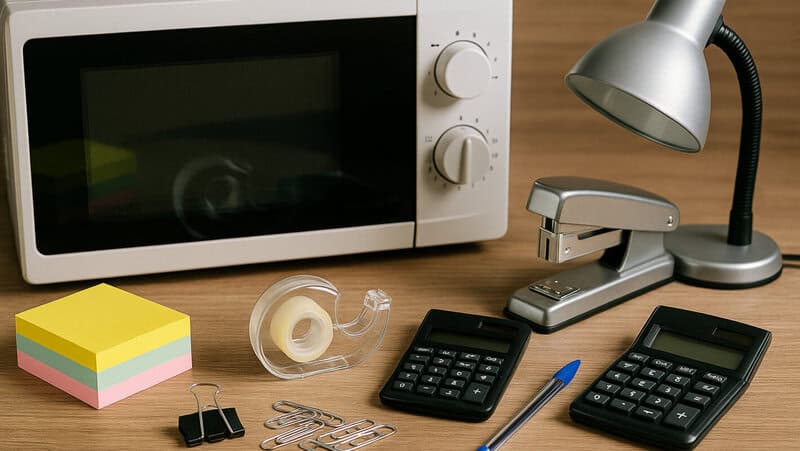
Post-it Notes were invented when a scientist accidentally created a low-tack adhesive, leading to an innovative solution for office bookmarks. Originally intended for business use, these sticky notes quickly became indispensable in homes for reminders, lists, and creative labeling. Like paper clips and staplers, Post-it Notes made the transition from office necessity to household staple, revolutionizing the way people organize both their work and personal lives.
2. Scotch Tape

Scotch Tape was invented in the 1930s to meet industrial needs for masking and packaging. Its clear, pressure-sensitive adhesive quickly proved invaluable for sealing boxes and protecting surfaces in factories. Over time, Scotch Tape found its way into households everywhere, becoming essential for wrapping gifts, fixing torn pages, and endless DIY solutions. Much like glue sticks and duct tape, this once strictly business product transformed into a versatile tool for everyday home repairs and creative projects.
3. Ballpoint Pen

The ballpoint pen was first developed in the 1930s by László Bíró, aiming to provide clerks and journalists with a pen that offered steady ink flow and didn’t smudge, unlike traditional fountain pens. Its practical design made it ideal for fast-paced office environments. Eventually, the ballpoint pen became a ubiquitous tool in homes and schools, favored for its reliability and convenience. Today, it far surpasses the fountain pen in popularity for everyday writing tasks.
4. Microwave Oven

The microwave oven was born from radar technology during World War II, when engineer Percy Spencer accidentally discovered its food-heating potential at Raytheon. Initially, microwaves were enormous and intended for restaurant and commercial use, enabling rapid food preparation. Only later did they shrink in size and price, finding their way into millions of homes and revolutionizing cooking convenience. Percy Spencer’s unexpected discovery led to the first commercial microwave, the Radarange, in 1947.
5. Paper Clips

Paper clips were originally invented to help offices efficiently manage and secure stacks of documents without damaging the paper, revolutionizing business organization. Over time, their simple yet effective design made them a household essential, used for everything from keeping schoolwork tidy to sealing snack bags. Today, paper clips are a staple in both professional and personal settings.
6. Rubber Bands

Rubber bands were first invented by Stephen Perry in 1845 to help offices bundle and organize paperwork efficiently. Their stretchy, reusable nature quickly made them popular for a range of business tasks. Eventually, rubber bands found countless uses in homes, from food storage to arts and crafts projects. Unlike rigid fasteners such as staples or paper clips, their flexibility and versatility set them apart.
7. Zipper

The zipper was originally developed in the late 19th and early 20th centuries for use in boots and tobacco pouches, providing businesses with a quick and secure fastening solution. Its efficiency soon led to widespread adoption in the fashion industry, replacing buttons and snaps on clothing, bags, and even home textiles like cushion covers. The zipper’s simple mechanism made it superior for speed and reliability.
8. Filing Cabinets

Filing cabinets were invented in the late 19th century as a revolutionary office solution, streamlining the storage and retrieval of important documents for businesses. Their sturdy, compartmentalized design made them essential for managing growing amounts of paperwork. Gradually, filing cabinets migrated into homes, where they became indispensable for organizing bills, warranties, and personal records. Their influence is still seen today in modern home office organization, inspiring products like desktop organizers and digital file management systems.
9. Whiteboard

The whiteboard was first introduced in the 1960s for business meetings, brainstorming sessions, and presentations, offering a cleaner and more versatile alternative to chalkboards. Its easy-to-erase surface quickly made it a staple in offices. Over time, whiteboards migrated into kitchens for family notes, kids’ rooms for drawing, and home offices for planning. Unlike chalkboards, whiteboards are dust-free and reusable, though digital alternatives now offer even more flexibility.
10. Calculator

Electronic calculators were originally developed in the mid-20th century to assist businesses with complex accounting and financial calculations, replacing bulky adding machines. Their speed and accuracy revolutionized office work. As technology advanced and prices fell, calculators became compact and affordable, quickly turning into a household essential. Today, they’re used for everything from helping students with homework to managing family budgets.
11. Envelope

The envelope was initially designed in the 19th century for securely mailing business correspondence, offering privacy and professionalism for commercial communications. As postal services expanded, envelopes became a necessity for personal letters, greeting cards, and even organizing small items at home. Today, they’re a household staple, used for everything from sending invitations to storing receipts.
12. Stapler

The stapler was invented in the late 19th century to help businesses efficiently bind large volumes of paperwork, streamlining office organization and recordkeeping. Its convenience and reliability soon led to widespread adoption in schools for student projects and at home for managing bills, receipts, and other important documents. Today, staplers are a universal tool for keeping papers together in every setting.
13. Label Maker

Label makers were first introduced as practical tools for businesses, designed to organize files, inventory, and office supplies with clear, easy-to-read labels. Their user-friendly design soon made them popular in homes for labeling jars, storage bins, school supplies, and even cables. Today, label makers are a favorite for anyone seeking order and clarity in both professional and personal spaces.
14. Desk Lamp

The desk lamp was originally designed to provide focused lighting for office workers burning the midnight oil, improving productivity and reducing eye strain. Its practical benefits soon led to widespread adoption in homes, where desk lamps became essential for reading, studying, crafting, and even creating cozy ambiance in living spaces. Today, their adjustable design and energy-efficient features make them a staple in both professional and personal environments.
15. Shredder

The paper shredder was invented in the early 20th century to help businesses securely dispose of sensitive documents and safeguard proprietary information. As concerns over identity theft and privacy grew, shredders became common in homes, allowing individuals to protect personal data such as bank statements and medical records. The rise of privacy trends and increasing security threats have cemented the shredder’s role in everyday life.
Conclusion

Reflecting on the surprising origins of these household essentials, it’s clear that innovation in business settings often paves the way for everyday convenience at home. Many of our most trusted tools and gadgets were born from workplace necessity, evolving into staples of daily life. As technology and office needs continue to change, the next big household breakthrough might already be taking shape behind a desk.


