Retailers masterfully use subtle psychological tricks to nudge shoppers into spending more than they planned. From manipulating store layouts to leveraging colors, music, and even scents, these techniques are designed to influence your decisions without you noticing. Understanding these mind games can help you shop smarter and resist unnecessary purchases. If you’re curious about the science behind these strategies, check out this Psychology Today article for deeper insights.

Julie Ann
· 5 min read
1. Decoy Pricing

Retailers often employ decoy pricing by introducing a high-priced, less appealing option to make a mid-tier choice look more attractive. This clever use of the decoy effect steers shoppers toward spending more than they planned. For example, at movie theaters, the medium popcorn is priced close to the large, making the large seem like a much better deal. To learn more about how this tactic works, explore this Harvard Business Review article.
2. Sensory Manipulation

Retailers expertly use sensory manipulation to influence customer behavior. By infusing stores with inviting scents, carefully chosen lighting, and curated music, they create an environment that feels welcoming and encourages shoppers to stay longer. Grocery stores often use the aroma of fresh bread to trigger appetite and increase purchases. Research also shows that the tempo of background music can alter shopping speed and spending habits. To discover more about how scent marketing impacts your shopping experience, read this Scientific American article.
3. Strategic Product Placement

Stores commonly use strategic product placement to boost sales of impulse items. By positioning essentials like milk and eggs at the back, supermarkets force customers to walk past enticing displays filled with snacks and other tempting products. This layout is designed to increase the likelihood of unplanned purchases as shoppers make their way through the aisles. Discover more about how these clever placement strategies work in this Business Insider article.
4. Limited-Time Offers

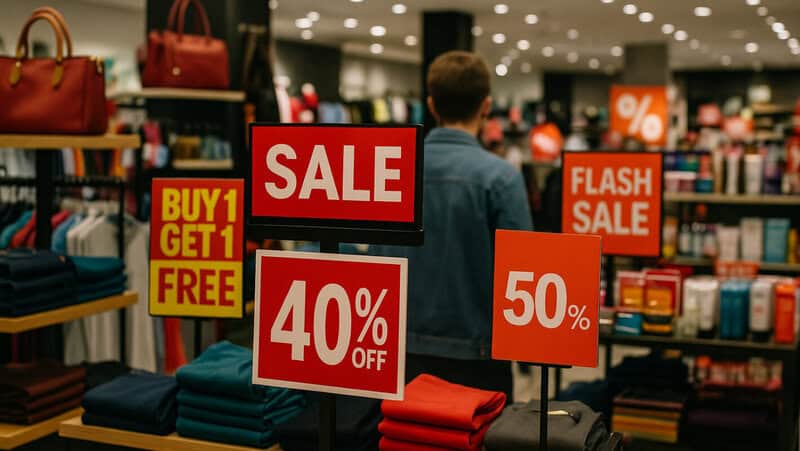
Retailers frequently use limited-time offers like “Flash Sales” or “Today Only” deals to instill a sense of urgency in shoppers. These time-sensitive promotions tap into the fear of missing out (FOMO), pushing customers to make quick decisions and purchase items they might normally skip. Online giants such as Amazon often feature countdown clocks to heighten this effect and drive impulse buys. For a deeper dive into how FOMO shapes online shopping behavior, visit this Forbes article.
5. Anchoring High Prices

Stores often leverage the anchoring effect by positioning expensive items at the start of your shopping experience. When shoppers see high-priced products first, it makes everything that follows seem more reasonably priced, subtly shifting perceptions of value. For instance, displaying premium electronics at the entrance causes mid-range models to feel like bargains. This pricing tactic is a classic example of how our judgment can be influenced by initial exposure. Learn more about this psychological bias in this Psychology Today article.
6. Loyalty Programs

Retailers use loyalty programs and point-based systems to reward frequent shopping, but there’s a catch: these programs often motivate customers to spend more than they intended. The psychological satisfaction of “earning” rewards—such as a free coffee after ten purchases—can drive shoppers to buy more just to reach the next milestone. This clever strategy increases overall spending while making customers feel like they’re getting a deal. For an insightful look at how loyalty programs work on our minds, check out this NPR article.
7. Bulk and BOGO Deals

Promotions like ‘Buy One Get One’ (BOGO) and bulk discounts are designed to entice shoppers to purchase more than they originally planned. Retailers such as Costco rely heavily on this tactic, encouraging larger purchases by lowering the per-unit price. However, while each item may be cheaper, the total amount spent increases. This psychological trick can lead to overbuying and waste. For an in-depth look at the impact of BOGO deals, read this New York Times article.
8. Personalized Recommendations

E-commerce sites employ personalized recommendations by analyzing your browsing and purchase history to suggest products that match your interests. Features like Amazon’s “Customers who bought this also bought…” tap into consumer biases, making it easier for shoppers to discover—and impulsively buy—additional items they hadn’t planned on. These algorithms are highly effective at increasing the average value of a shopping basket, subtly pushing users toward higher spending. To learn how these recommendation engines work and their influence on consumer behavior, read this MIT Technology Review article.
9. Checkout Add-Ons

Stores strategically place small, inexpensive items like gum, candy, or magazines near the checkout to trigger last-minute impulse buys. While customers wait in line, their exposure to these tempting products increases, making it easy to toss them into the cart without much thought. Despite their low price, these ‘grab-and-go’ goodies significantly boost overall profits. For more on the psychology and effectiveness of this tactic, check out this CNN article on impulse shopping.
10. Manipulative Sale Signs

Bright, attention-grabbing sale signs—especially those in red or yellow—are designed to spark urgency and excitement, even if the actual savings are minimal. The visual impact alone can elevate perceived value and trigger spontaneous purchases. Common tactics include signs like “Was $50, Now $39.99” to emphasize savings, persuading shoppers to act fast. These cues are so effective that they often drive sales regardless of the real discount. For more insight into this strategy, see this BBC article.
Conclusion

Retailers employ a range of psychological tactics—from strategic product placement to bold sale signs—to subtly influence your spending habits. By understanding these mind games, you can make more intentional purchasing decisions and avoid falling for impulse traps. Staying aware of these strategies empowers you to shop smarter and stick to your budget. For more tips on resisting retail manipulation, visit this helpful Consumer Reports guide. Stay mindful and make your shopping experience work for you, not the store.


